
Every artist whom you respect has also faced that awful moment when the page is empty before them. If you have typed “art and craft for beginners” in your search engine, which means you would like to learn something more than just another creative list of ideas you cannot carry out yourself, you are in the right place.
Regardless of whether you are a student, who wants to find a new hobby, a parent who is looking for creative options of spending time with children, or simply a person who has not been holding a pencil or scissors for a longer period of time, the craft skills that you learn will make your life more pleasurable and easier.
Here’s your complete, no-overwhelm roadmap to getting started.
Why Learn Art and Craft as a Beginner?
Prior to getting ahead with the techniques, it is useful to understand the reasons behind checking this out:
- Enhances concentration and diminishes stress – working with hands creates a calming and meditative impact on the brain;
- Increases self-esteem – the completion of any small project signifies the acquisition of a new skill;
- Improves fine motor skills and coordination – especially beneficial for younger students;
- Provides a chance to start a creative career – many professionals such as designers and illustrators began their careers with simple crafts;
- Is genuinely enjoyable – a low-pressure way to show yourself without the obligation of perfection.
Essential Art and Craft Supplies for Beginners
You don’t need a fully stocked studio to begin. Start with this simple kit:
- Paper – sketch paper, chart paper, and colored paper
- Pencils and erasers – for sketching and outlining
- Basic paints – poster colors or watercolors are the most beginner-friendly
- Scissors and glue – for paper craft and collage work
- Sketchbook – your dedicated space to experiment without judgment
- Craft materials – ice-cream sticks, clay, thread, buttons, or recycled material for hands-on projects
Keep it simple at first. Buying too many tools too soon is one of the most common reasons beginners feel overwhelmed and quit early.
Easy Art and Craft Techniques to Start With
1. Sketching and Line Drawing
Sketching represents the primary source of nearly every type of art from the visual art family. Therefore, beginning with simple shapes and object or practicing the “blind contour drawing” where the artist sketches without staring at the paper can help a great amount in perfecting hand-eye coordination.
2. Paper Craft and Origami
Paper craft is one of the most accessible entry points into art because it needs minimal supplies. Begin with simple origami models like a boat, a crane, or a paper flower before moving to more detailed folds.
3. Painting Basics
Start with poster colors or watercolors on simple subjects; fruits, leaves, or basic landscapes. Learn how to mix primary colors and understand light and shadow (called “value”) before attempting detailed paintings.
4. DIY and Craft Projects
Try beginner-friendly DIY projects like handmade greeting cards, decorated photo frames, or upcycled home décor using recycled material. These give quick, visible results, which keeps motivation high.
5. Clay Modeling and Sculpture
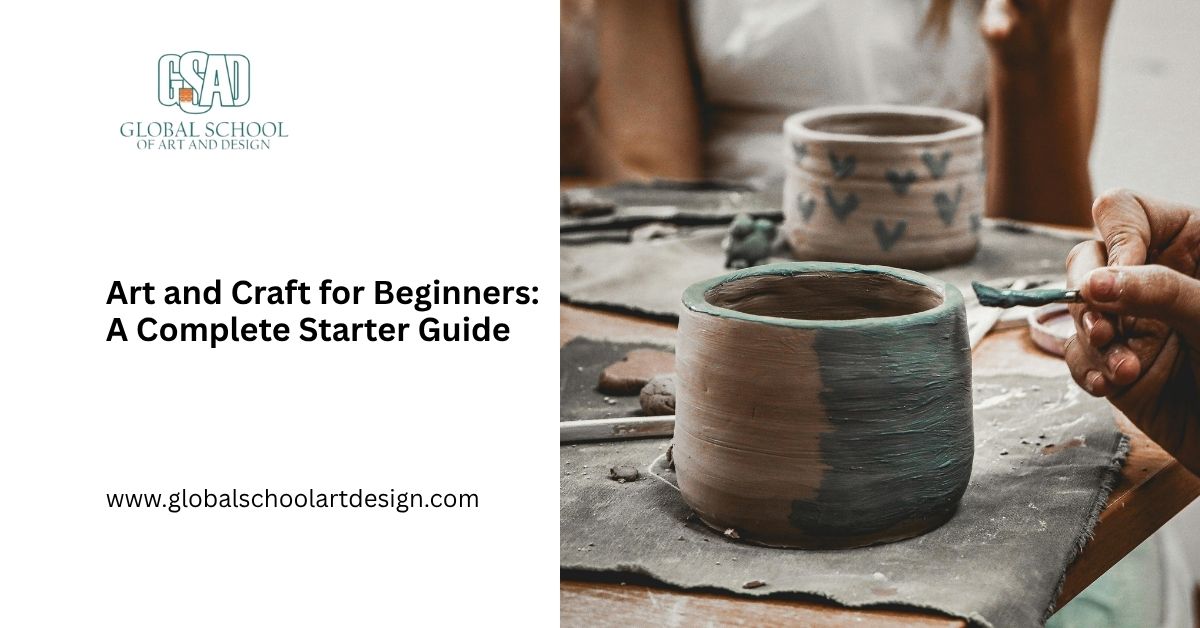
Working with clay is a great tactile way to understand form and structure. Start with simple shapes – bowls, animals, or basic figures; before attempting detailed sculptures.
Common Beginner Mistakes to Avoid
Doing several crafts simultaneously – choose one and gain confidence in it, and then try another one. Comparing your first attempts to those of a pro – every artist started messy. Not practicing – practicing is more vital than talent. Being afraid of mistakes – view mistakes as learning opportunities instead of failures.
How to Keep Improving After the Basics
- Practice a little every day, even 15-20 minutes counts.
- Keep a dedicated sketchbook or “practice space” for experiments.
- Study color theory and composition as you progress.
- Follow structured lessons instead of random tutorials – a guided path helps you avoid learning gaps.
- Share your work and get feedback from mentors or a community of learners.
Ready to Take Your Skills Further?
Reading about art and craft is a great first step; but real growth happens with structured guidance, hands-on practice, and expert feedback. At Global School of Art & Design (GSAD), we help beginners of all ages turn their first sketches and simple crafts into real, confident artistic skills; through guided courses designed specifically for students starting out.
Explore GSAD’s beginner-friendly art and craft courses today and take your first confident step into the world of creativity.
Whether you dream of becoming a professional designer, illustrator, or simply want a creative skill for life, GSAD is here to guide you from your very first stroke to your finest work.